


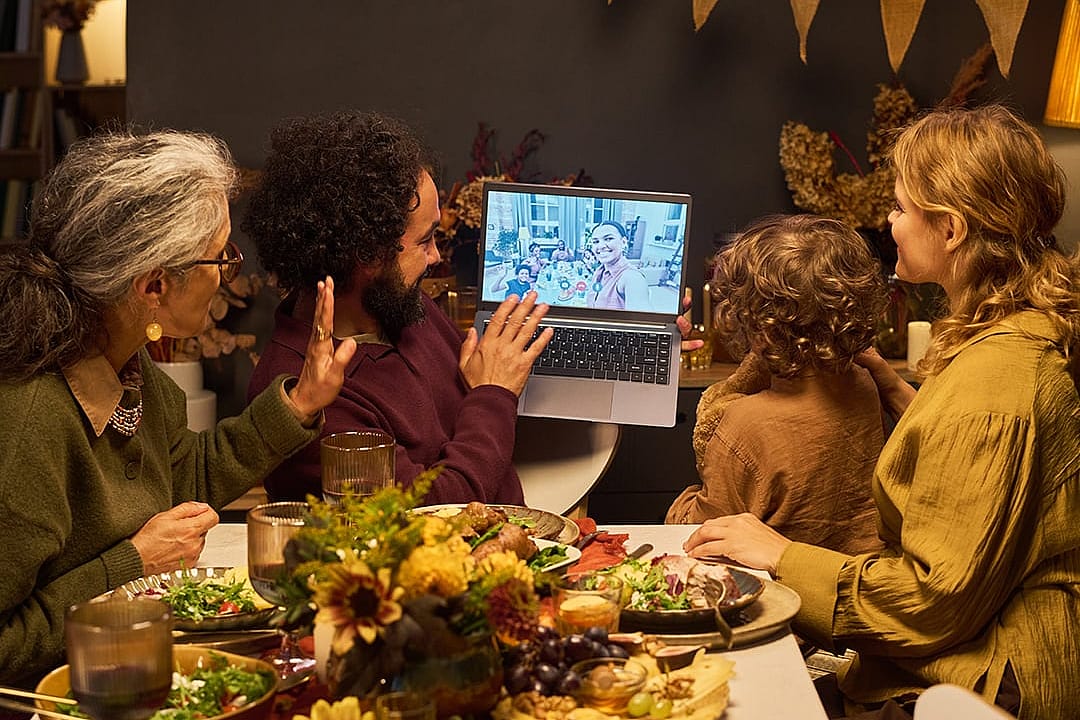

Thanksgiving might mean a full house, dinner for two, or a quiet day at home. Maybe there's a dish you look forward to all year, someone you miss, or a family conversation that takes some patience. The holiday can bring cherished memories with loved ones, but it can also bring negative feelings and unwanted stress.
Whatever your day looks like, it probably comes with a few traditions: the side dish that shows up every year, a morning turkey trot, a round of thank-yous at the table, or a call to someone who can't be there.
And many readers may wonder: Can the traditions themselves do anything for your mental health? Research on everyday habits suggests some of them might. Sharing a meal, saying thank you, getting outside, and giving to others have all been linked to better well-being and mood. Blueprint explores how these eight Thanksgiving traditions may support mental health and offers tips for making them work for you.
Eating with others is closely tied to happiness, and Americans are sharing fewer meals. Roughly 26% of U.S. adults ate every meal alone on an average day in 2023. In the 2025 World Happiness Report, people who share more of their meals report higher life satisfaction and more positive emotions. The report even found that sharing meals is as strong an indicator of well-being as income or unemployment. People who ate with others at least once during the day reported more happiness than people who ate every meal alone. Thanksgiving doesn't have to be a grand get-together, and sharing a meal with the people closest to you matters far more than any big gesture.
Saying thank you can benefit the person who says it. In a 2018 randomized controlled trial of 293 adults receiving psychotherapy, participants who also wrote letters of gratitude reported significantly better mental health than those who didn't. The difference appeared about a month after the writing ended and remained three months later.
Part of what makes holiday food comforting is who it reminds you of. The smell of a familiar dish may bring back the kitchen where it was first made, the person who taught you the recipe, or the gatherings where it always showed up. Researchers call this food-evoked nostalgia.
Nostalgia has a reputation for being bittersweet, but for most people, it's comforting. Remembering a shared meal can remind you where you come from and who you're closest to. For anyone grieving, a loved one's recipe can also keep them present at the table. Grief therapists often call this a continuing bond, staying connected to someone through the stories and rituals you shared. If making their dish brings up sadness along with the good memories, that mix of feelings is a normal part of grief.
A 2024 study by Helen Keyes and colleagues found that people who had engaged in arts and crafts in the past year reported greater happiness, higher life satisfaction, and a stronger sense of life's worth, even after the researchers accounted for factors such as age, gender, health, and employment.
Big gatherings can be a lot, especially for guests who feel anxious in a crowd or don't know many people there. A simple craft gives them something to do with their hands while dinner cooks. Working side by side on place cards or a centerpiece can also make conversation easier, since nobody has to come up with small talk on the spot.
Even a single bout of exercise can ease anxiety, making it a useful break on a busy holiday. According to the CDC, a brisk walk or any workout that gets your heart pumping can reduce feelings of anxiety right afterward.
Many communities hold a turkey trot on Thanksgiving morning, and walking it with family or friends turns exercise into time together.
A holiday outing can also be a chance to slow down. Sitting among trees or taking an easy walk through a nearby green space gives people an option that doesn't require a race or a brisk pace.
A 2015 meta-analysis by Ethan McMahan and David Estes found that, compared with other settings or activities, brief contact with natural environments was associated with a moderate increase in positive feelings and a smaller but consistent decrease in negative feelings.
Helping others can lift the helper's mood. According to the 2025 World Happiness Report's chapter on kindness, generous behavior is linked to, and often directly causes, greater well-being for those who give. The chapter also points to three conditions that can make giving more rewarding.
The first is choice. It feels better to give when you make the decision. The second is connection. Giving within a community of people who care about each other is more likely to feel rewarding. The third is impact. People get more out of giving when they can see how it helps.
Holidays can make it more obvious who's missing, whether someone lives far away, has to work, is in the hospital, or couldn't make the trip this year. A phone or video call can bring them into the day. It matters on their end too, because spending a holiday apart can feel isolating.
Hearing a loved one's voice can make a check-in feel more personal than a text, since you can hear their tone and laughter. In a 2021 experiment, researchers Amit Kumar and Nicholas Epley found that phone or video calls built stronger bonds than texts or emails, and without feeling any more awkward. Many participants still preferred to type because they expected a call to feel awkward.
It's also worth thinking about who might be having a harder holiday, like a friend who recently lost someone or a relative spending the day alone. A few minutes on the phone lets them know you're thinking of them.
You don't have to try all eight. Vivian Chung Easton, LMFT, CHC, a clinician at Blueprint, recommends choosing the ones that fit your day and adjusting them to suit the people around you.
Most of these traditions come down to habits you can keep after the holiday, too. Thanksgiving is a good day to start.
If you're in emotional distress or a suicidal crisis, call or text 988 to reach the Suicide & Crisis Lifeline, available 24/7 in the United States and its territories.
This story was produced by Blueprint and reviewed and distributed by Stacker.


